Pet Stain & Odor Removal Tips for Carpets and Upholstery
Pet ownership brings immense joy, but accidents happen that can leave lasting stains and odors in your home's carpets and upholstery. Whether dealing with fresh spills or set-in stains, knowing the right techniques can save your furnishings and restore your home's fresh atmosphere. Professional pet stain removal in Murfreesboro, TN requires understanding the science behind effective cleaning solutions and applying proven methods that address both visible stains and lingering odors.
Key Takeaways
- Act quickly - Fresh stains are significantly easier to remove than set-in stains that have had time to penetrate deep into fibers
- Blot, don't rub - Rubbing pushes stains deeper into carpet and upholstery fibers, making removal more difficult
- Use enzyme-based cleaners - These break down organic compounds in pet waste, eliminating both stains and odor sources
- Test cleaning solutions first - Always test any cleaning product on an inconspicuous area to prevent damage or discoloration
- Address underlying padding - Urine can seep through carpet into padding, requiring professional deep steam cleaning for complete removal
- Consider professional services - Persistent odors and extensive staining often require professional equipment and expertise
Understanding Pet Stains and Odors
Pet accidents create complex cleaning challenges because they involve multiple components that must be addressed separately. Fresh urine contains urea, urochrome (which causes yellow coloring), and various salts and proteins. As urine dries, bacteria begin breaking down these components, producing ammonia and other compounds that create persistent odors.
The porous nature of carpet fibers and upholstery fabrics allows pet waste to penetrate deeply, often reaching backing materials and padding underneath. This makes surface cleaning insufficient for complete odor elimination. Understanding this process helps explain why some stains seem to disappear initially but return later - the source remains embedded in lower layers.
Types of Pet Stains
Different types of pet accidents require specific approaches for effective removal:
- Fresh urine stains - Easiest to address when tackled immediately with proper blotting and cleaning solutions
- Set-in urine stains - Require enzyme treatments and may need multiple cleaning cycles to fully eliminate
- Vomit stains - Contain acids and food particles that can cause discoloration and require pH-neutral cleaning approaches
- Feces stains - Present contamination risks and require thorough sanitization in addition to stain removal
- Blood stains - Need cold water treatment to prevent protein setting and may require hydrogen peroxide for complete removal
Immediate Response Techniques
Quick action dramatically improves your chances of complete stain and odor removal. The first few minutes after discovering an accident are critical for preventing permanent damage to your carpets and upholstery.
Step-by-Step Emergency Response
For fresh liquid accidents:
- Remove solid waste carefully with a plastic bag or paper towels
- Blot up as much liquid as possible using clean, absorbent towels
- Work from the outside of the stain toward the center to prevent spreading
- Continue blotting until towels come up relatively dry
- Rinse the area with cool water and blot again
- Apply appropriate cleaning solution based on stain type
For solid waste accidents:
- Remove all visible material without pressing it deeper into fibers
- Vacuum loose particles if the waste has dried
- Apply cleaning solution to remaining residue
- Allow solution to work for recommended contact time
- Blot thoroughly and rinse with clean water
Common Mistakes to Avoid
Many homeowners inadvertently make stains worse through well-intentioned but incorrect cleaning attempts. Using hot water on protein-based stains like urine actually cooks the proteins into the fibers, making removal nearly impossible. Rubbing or scrubbing pushes stains deeper and can damage delicate carpet fibers or upholstery fabrics.
Steam cleaning over urine stains without proper pre-treatment often spreads the stain and drives odors deeper into padding materials. Professional pet odor removal services in Murfreesboro recognize these common pitfalls and use systematic approaches that avoid these problems.
Effective Cleaning Solutions
The most successful pet cleaning solutions target the specific components found in pet waste. Enzyme-based cleaners excel because they literally digest organic matter, eliminating both visible stains and odor sources at the molecular level.
Commercial Cleaning Products
| Product Type | Best For | How It Works | Application Tips |
|---|---|---|---|
| Enzyme Cleaners | All organic stains | Break down proteins and bacteria | Allow longer contact time for best results |
| Oxygen Bleaches | Color-safe stain removal | Lift stains without fabric damage | Test colorfastness first |
| Vinegar Solutions | Fresh urine, light stains | Neutralize alkaline components | Use white vinegar only |
| Bacterial Cleaners | Persistent odors | Introduce beneficial bacteria | May require multiple applications |
DIY Solution Recipes
Professional-grade results don't always require commercial products. These homemade solutions can be effective for many situations:
Basic Enzyme Alternative:
- 1 cup warm water
- 1/4 cup white vinegar
- 1 tablespoon dish soap
- 1 tablespoon baking soda (add last to prevent excessive foaming)
Heavy-Duty Odor Eliminator:
- 16 ounces hydrogen peroxide (3% solution)
- 1 tablespoon baking soda
- 1 teaspoon liquid dish soap
- Mix in a spray bottle and use immediately
Gentle Upholstery Cleaner:
- 2 cups warm water
- 1 tablespoon white vinegar
- 1 tablespoon rubbing alcohol
- 1 teaspoon clear dish soap
Professional vs. DIY Approaches
While many pet stains respond well to homeowner treatment, certain situations benefit from professional intervention. Understanding when to attempt DIY solutions versus calling Murfreesboro carpet cleaners can save time, money, and prevent permanent damage to your furnishings.
When DIY Methods Work Best
Small, fresh accidents on synthetic carpets typically respond well to immediate home treatment. Pet stains on easily cleanable surfaces like tile or sealed hardwood floors can usually be managed with appropriate cleaning products and techniques. Regular maintenance cleaning helps prevent minor issues from becoming major problems.
Upholstery made from durable, colorfast fabrics may be suitable for careful DIY treatment using appropriate cleaning solutions and techniques. Always test cleaning products in inconspicuous areas before treating visible stains.
When Professional Help Is Necessary
Extensive contamination that has reached carpet padding or subflooring requires professional extraction equipment and antimicrobial treatments. Natural fiber carpets and delicate upholstery fabrics risk damage from improper cleaning techniques or harsh chemicals.
Set-in stains that have been present for weeks or months often need professional-strength enzyme treatments and specialized extraction methods. Persistent odors that return after cleaning typically indicate contamination in padding or subflooring that requires professional assessment.
Professional advantages include:
- Industrial-strength extraction equipment for deep cleaning
- Specialized pet urine stain treatment formulations
- Experience identifying hidden contamination areas
- Ability to treat carpet padding and subflooring when necessary
- Professional-grade antimicrobial treatments for health safety
Deep Cleaning Methods
Thorough pet stain removal often requires going beyond surface treatments to address contamination that has penetrated deeply into carpet and upholstery materials. Deep steam cleaning represents the gold standard for comprehensive stain and odor elimination.
Steam Cleaning Process
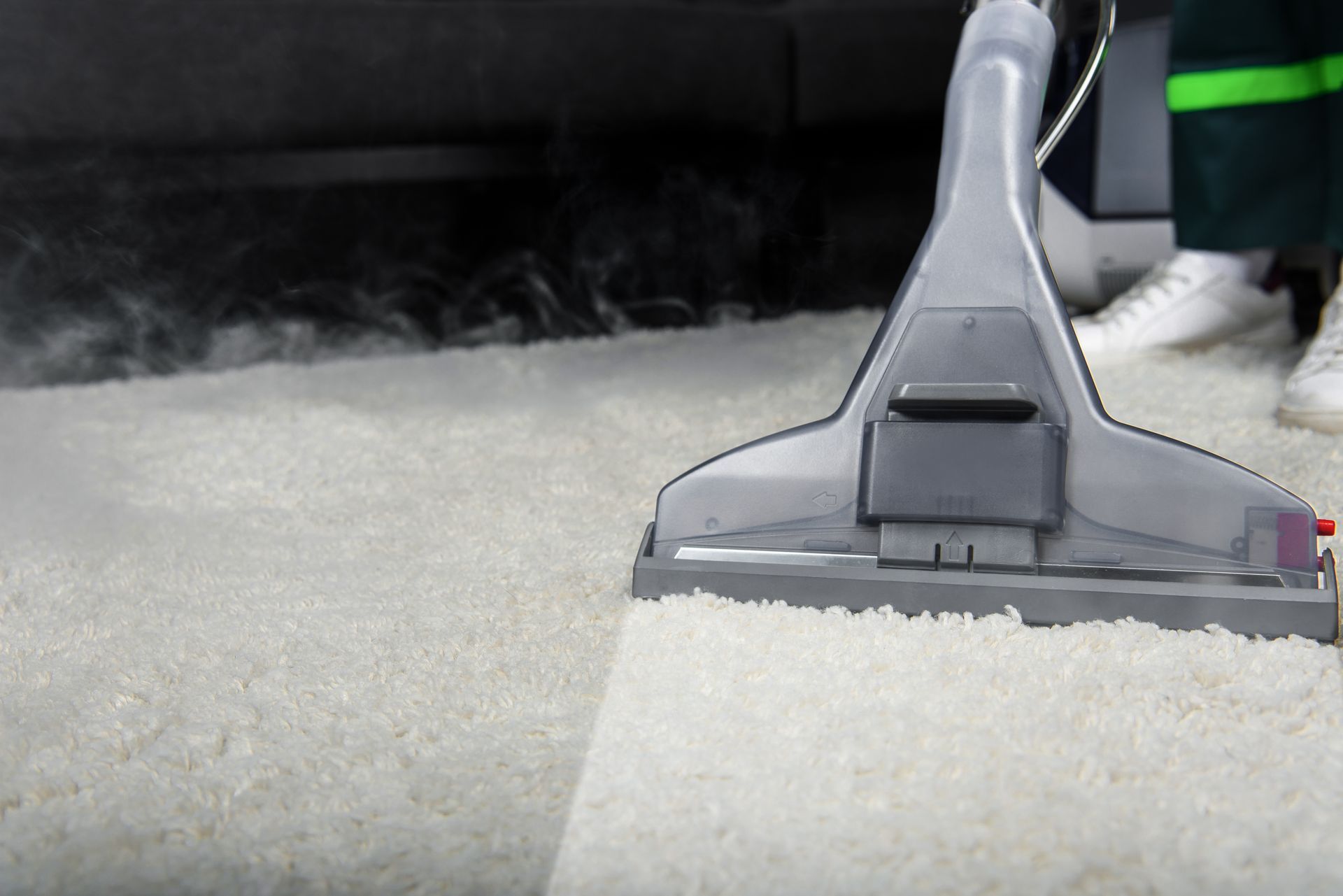
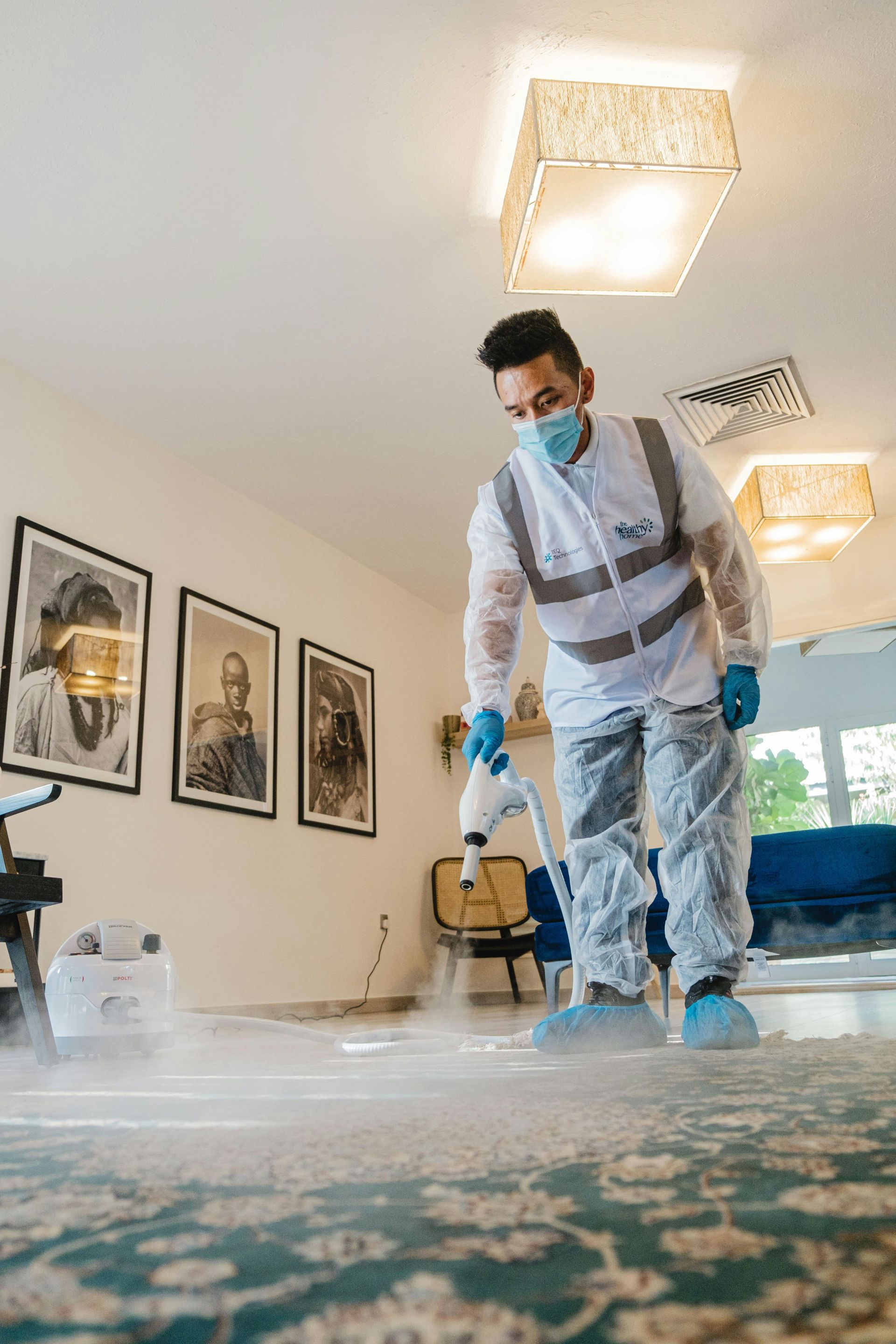
Professional deep steam cleaning uses high-temperature water and powerful extraction to remove contaminants from deep within carpet fibers. The process begins with thorough pre-treatment of stained areas using appropriate cleaning agents designed for the specific type of contamination present.
Hot water extraction follows, using temperatures that help break down stubborn residues while powerful suction removes moisture and dissolved contaminants. This process reaches contamination that surface cleaning cannot address, making it essential for complete pet odor removal.
Carpet Padding Considerations
When pet urine reaches carpet padding, surface cleaning becomes insufficient for odor elimination. Padding materials are highly absorbent and can retain odors even after carpet cleaning. Professional assessment determines whether padding replacement is necessary or if specialized treatments can salvage the existing materials.
Some situations require partial padding replacement in heavily contaminated areas while treating surrounding zones with antimicrobial solutions. This targeted approach balances cost considerations with effective odor elimination.
Upholstery Deep Cleaning
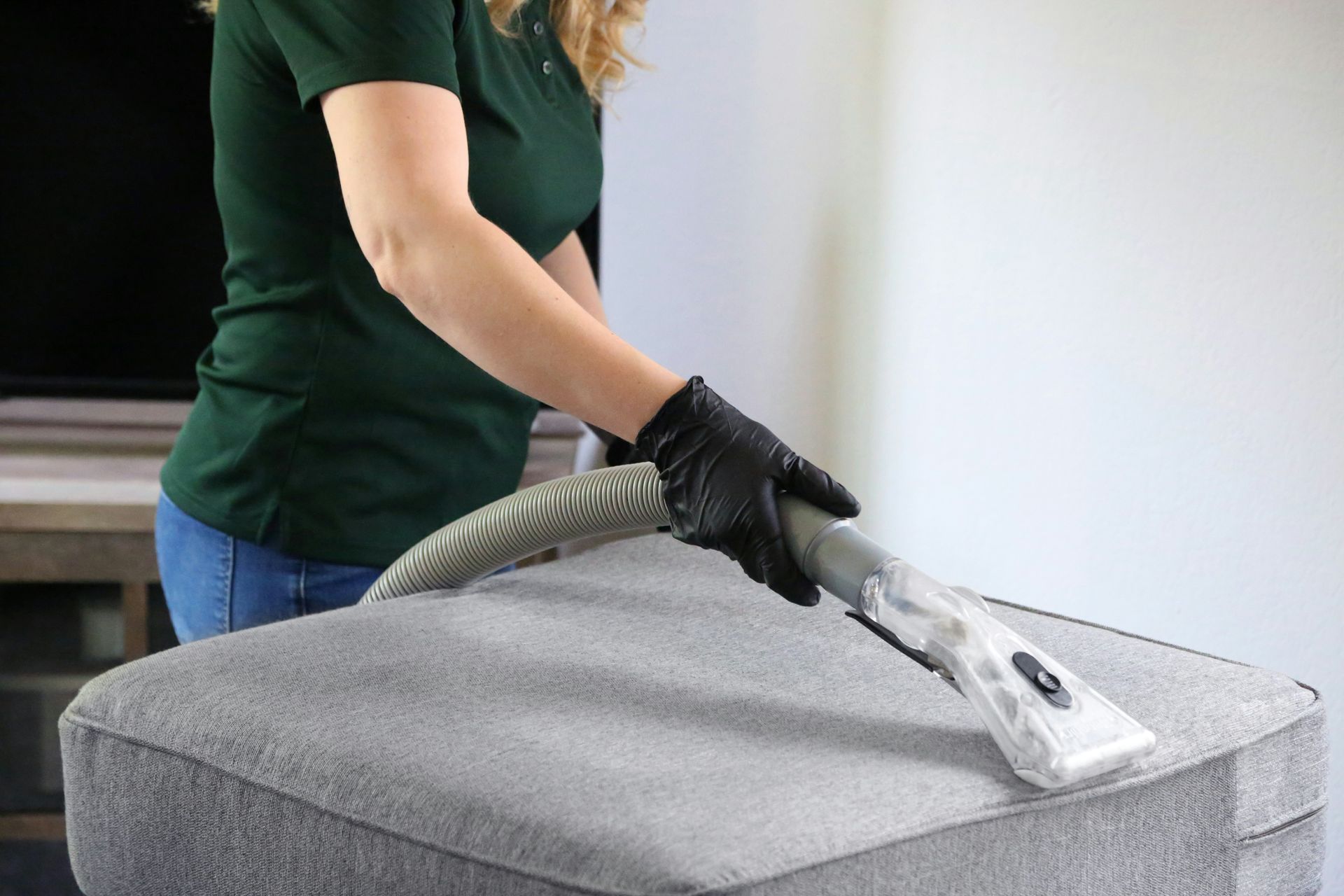
Upholstery pet stain removal requires careful attention to fabric type and construction methods. Professional cleaning technicians assess fabric care codes and manufacturer recommendations before selecting appropriate cleaning methods and solutions.
Steam cleaning upholstery uses lower moisture levels than carpet cleaning to prevent damage to cushion filling and frame materials. Proper drying is essential to prevent mold and mildew development in cushions and frame components.
Prevention and Maintenance
Preventing pet accidents and maintaining clean carpets and upholstery reduces the need for intensive stain removal treatments. Simple maintenance routines and preventive measures protect your investment in home furnishings while creating healthier indoor environments.
Routine Maintenance Schedule
Regular vacuuming removes pet hair, dander, and tracked-in debris that can contribute to odor problems. Weekly deep vacuuming of high-traffic areas prevents the buildup of organic materials that can worsen pet-related odors.
Monthly application of fabric protector sprays designed for pet households helps resist stains and makes cleanup easier when accidents occur. These products create barriers that prevent immediate penetration of liquids into fibers.
Quarterly professional maintenance includes:
- Application of fabric protection treatments
- Assessment for hidden contamination areas
- Preventive odor treatment in problem zones
Creating Pet-Safe Zones
Designating specific areas for pet activities helps concentrate cleaning efforts and protects valuable furnishings. Washable rugs and furniture covers provide protection while maintaining home comfort and style.
Training pets to use designated bathroom areas reduces random accidents throughout the home. Consistent cleanup routines reinforce proper behavior while maintaining sanitary conditions.
Health and Safety Considerations
Pet waste contains bacteria and parasites that pose health risks, particularly in households with young children, elderly residents, or immunocompromised individuals. Proper cleaning techniques include safety measures that protect family health while effectively addressing stains and odors.
Protective Measures During Cleaning
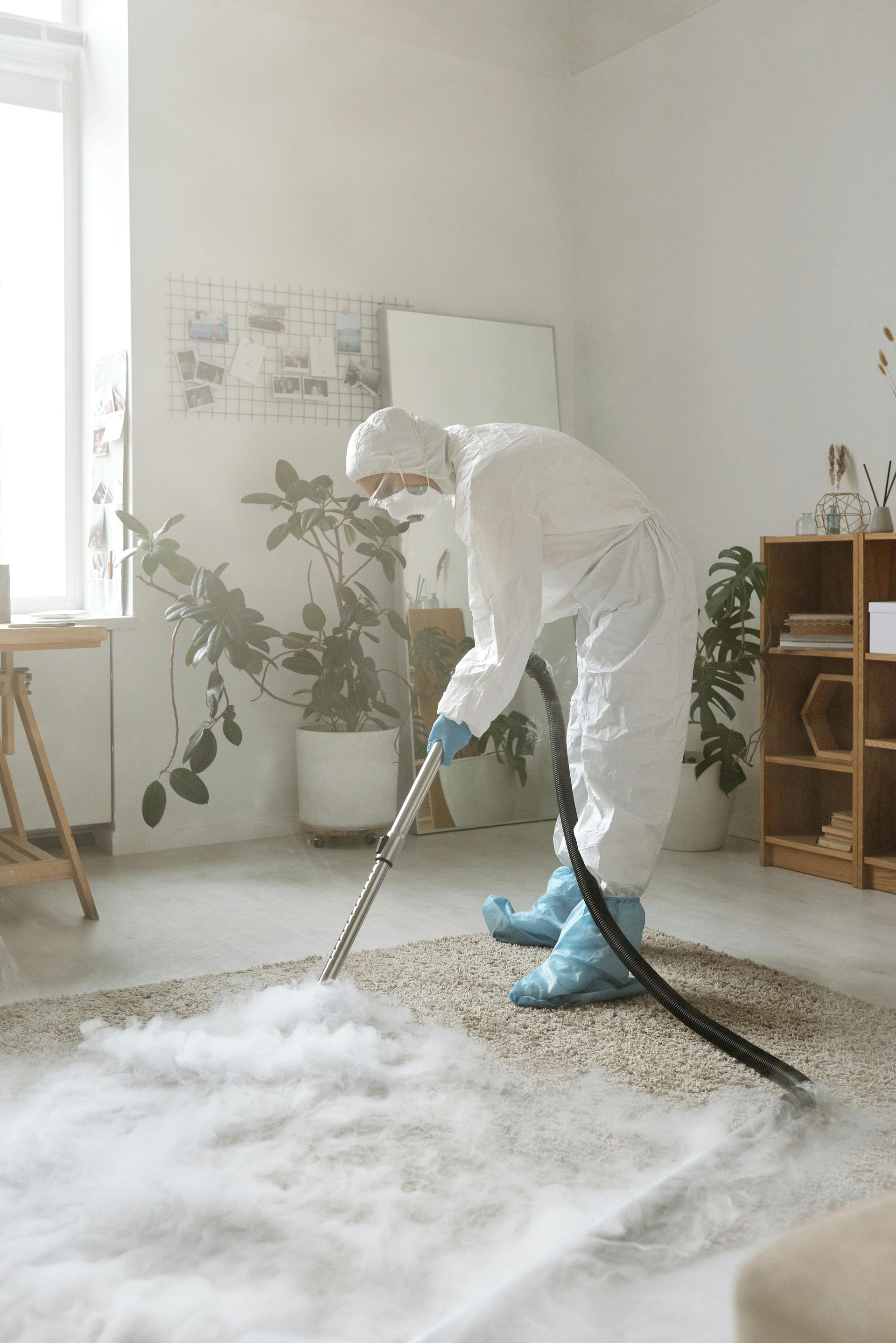
Always wear gloves when cleaning pet accidents to prevent direct contact with harmful bacteria. Ensure adequate ventilation when using cleaning chemicals, particularly ammonia-based products that can cause respiratory irritation.
Dispose of contaminated cleaning materials properly in sealed bags to prevent the spread of bacteria and parasites. Wash hands thoroughly after cleaning activities, even when wearing protective gloves.
Indoor Air Quality Impact
Persistent pet odors indicate ongoing bacterial activity that can affect indoor air quality. Effective odor elimination improves air quality while reducing allergens that can trigger respiratory problems in sensitive individuals.
Professional antimicrobial treatments address health concerns while eliminating odor sources. These treatments are particularly important in homes with multiple pets or recurring accident problems.
Frequently Asked Questions
How long should I let enzyme cleaners sit on pet stains?
Enzyme cleaners need adequate contact time to break down organic matter effectively, typically 10-15 minutes for fresh stains. Set-in stains may require 30 minutes or longer contact time for optimal results.
Can I use regular carpet cleaner on pet urine stains?
Regular carpet cleaners often lack the enzyme components necessary to break down urine proteins and bacteria completely. Pet-specific cleaners formulated for organic waste provide better long-term odor control and stain removal.
Why do pet odors sometimes return after cleaning?
Returning odors usually indicate incomplete removal of contamination, particularly in carpet padding or subflooring areas. Professional deep steam cleaning with antimicrobial treatment addresses these hidden contamination sources effectively.
Is it safe to mix different cleaning products for better results?
Mixing cleaning products can create dangerous chemical reactions and should always be avoided. Use one cleaning product at a time and allow adequate rinsing between different treatments to prevent chemical interactions.
How often should I have carpets professionally cleaned in a pet household?
Pet households typically benefit from professional cleaning every 6-12 months, depending on the number of pets and frequency of accidents. Homes with multiple pets or recurring problems may need quarterly professional attention.
Final Thoughts
Successful pet stain removal requires understanding the science behind effective cleaning while applying proven techniques that address both immediate stains and long-term odor problems. While many situations respond well to prompt DIY treatment, persistent problems often benefit from professional expertise and equipment that can address contamination throughout carpet and upholstery systems. Regular maintenance combined with quick response to accidents helps maintain fresh, healthy indoor environments that both pets and families can enjoy.
Don't let persistent pet odors compromise your home's comfort. Contact our experienced team for thorough carpet pet stain removal and upholstery cleaning services that eliminate stains and odors at the source.
Reference:
https://poopickers.ca/the-hidden-dangers-of-pet-waste/